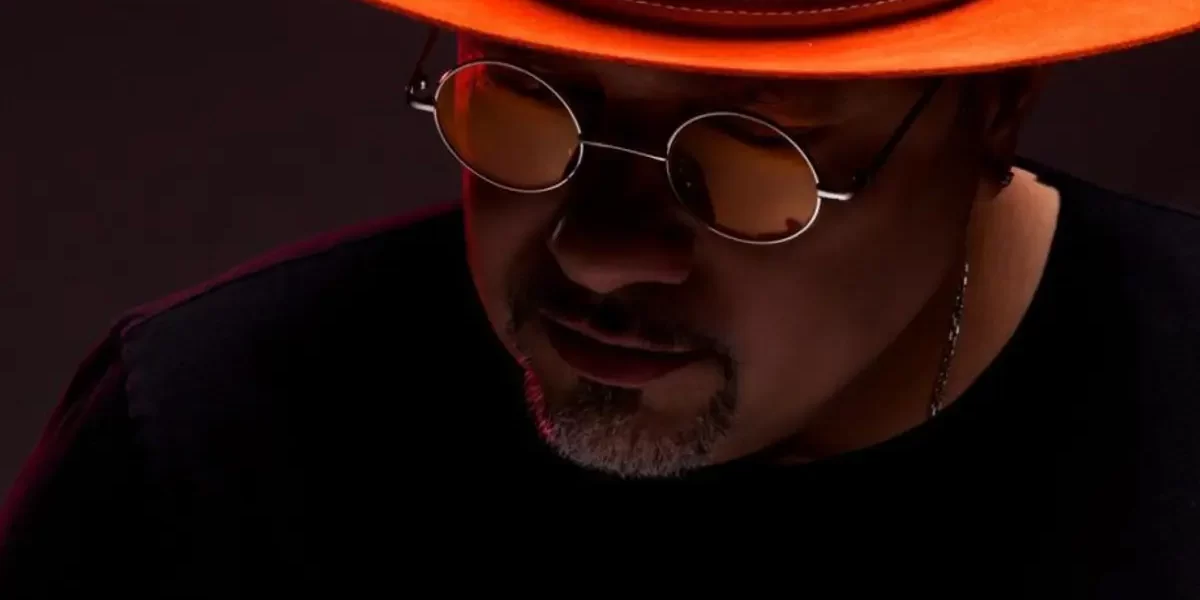
Louie Vega – A True Master at Work
Some DJs follow trends. Some producers chase hits. Louie Vega does neither. For over four decades, he has carved his own path, blending the sounds of his Puerto Rican roots with the energy of New York’s dance floors. He has played a role in shaping house music while keeping it grounded in soul, culture, and community.
This is the story of Louie Vega — from his Bronx upbringing to Masters at Work, and from global recognition to the work he continues today.
Chapter 1: Growing Up in the Bronx
Louie Vega was born Luis Ferdinand Vega Jr. in 1965, right in the Bronx. His family was musical before he was. His father was a jazz saxophonist. His uncle was Héctor Lavoe, the legendary salsa singer whose voice defined the Fania Records era. Music was never something he had to go looking for — it was already in his blood.
The Bronx in the 1970s was a tough place, but it was alive with sound. On one block, you’d hear salsa blasting from windows. Down the street, funk and soul records shook the walls. And in nearby parks, DJs were spinning breakbeats, laying the foundation for hip-hop.
This was the soundtrack of Louie’s youth. By his teens, he was fascinated with how DJs controlled energy. He started collecting records and trying his hand at mixing. Unlike many of his peers, Louie wasn’t satisfied playing one style. He wanted to connect the dots — salsa to disco, jazz to funk, house to gospel.
Chapter 2: Finding His Voice as a DJ
Louie’s first gigs were at neighbourhood parties and small clubs. He quickly stood out for two reasons. First, his technical skill — his blends were smooth, his timing sharp. Second, his feel. Louie had a way of reading the room and shifting the mood without losing the thread.
By the mid-1980s, he was securing residencies at clubs across New York. At 21, he landed a spot at Heartthrob, one of the city’s most talked-about venues. He wasn’t just another DJ on the roster. His sets carried warmth, groove, and storytelling. Crowds left feeling they had been part of something deeper than just a night out.
Influences like Larry Levan at Paradise Garage shaped him. He saw how Levan treated a DJ set as a journey, not just a playlist. Louie took that lesson and made it his own.
Chapter 3: Meeting Kenny “Dope” Gonzalez
In the late 1980s, Louie crossed paths with Kenny Gonzalez, better known as Kenny Dope. Kenny came from Brooklyn and was already known for his digging skills — finding rare funk, breaks, and Latin records that nobody else had.
Their backgrounds were different, but their vision aligned. Louie carried the soul, disco, and Latin heritage. Kenny carried hip-hop grit and funk. Together, they realised they could create something bigger than either could alone.
By 1990, the duo officially formed Masters at Work (MAW).
Chapter 4: Masters at Work Rise
Masters at Work quickly became one of the most influential forces in house music. Their productions weren’t built on simple drum machines or short loops. Instead, they layered percussion, live instrumentation, and gospel-inspired vocals. The result was a sound that was both global and deeply New York.
Early MAW records like “The Ha Dance” (a ballroom classic) and “Love and Happiness” showed their range. They could make raw club anthems and soulful, spiritual cuts with equal impact.
Their reputation as remixers grew fast. Soon, major artists came calling.
-
Madonna asked them to remix “Secret.”
-
Michael Jackson had them re-imagine “In the Closet.”
-
Luther Vandross and Jamiroquai both benefited from the MAW touch.
These weren’t just extended dance edits. MAW rebuilt tracks from the ground up, often making the remix more enduring than the original.
Chapter 5: Nuyorican Soul – A Statement Album
In 1997, Vega and Gonzalez launched Nuyorican Soul, a project that pushed their vision further. Instead of samples, they worked with live musicians. Instead of club tracks, they aimed for an album that could sit alongside jazz, soul, and salsa records.
They brought in legends: George Benson on guitar, Roy Ayers on vibraphone, Tito Puente on percussion, Jocelyn Brown on vocals. The album blurred genres seamlessly. Tracks like “Runaway” and “It’s Alright, I Feel It!” became classics that crossed boundaries — embraced by jazz heads, house fans, and soul purists alike.
Nuyorican Soul wasn’t just music; it was a cultural moment. It showed that house producers could be curators of heritage, bridging generations through rhythm.
Chapter 6: Vega Records and Elements of Life
While Masters at Work made their mark, Louie also built his solo identity. He launched Vega Records in the 1990s, giving him a platform to release music without compromise. The label became a trusted name for DJs worldwide. If it said “Vega Records” on the vinyl, you knew it would last.
Louie also created Elements of Life, a live band that took house music out of the club and onto stages with horns, strings, and vocalists. The project blended house, Latin, jazz, and gospel in a way that honored his roots while moving forward.
This step was unusual at the time. Most house producers stayed behind the decks. Louie showed that house could stand alongside live performance traditions without losing its essence.
Chapter 7: Style and Philosophy
Louie Vega’s style can be summed up in one word: soulful. But it’s more than that. It’s about respect. Respect for the dance floor. Respect for musicianship. Respect for the cultures that built the music.
As a DJ, he builds patiently. His sets are journeys, with long blends and shifts that feel organic. He doesn’t chase peaks for the sake of it. Instead, he lets the groove breathe, trusting the crowd to follow.
As a producer, he avoids shortcuts. Where others might sample, Louie calls the musicians into the studio. He records live congas, horns, and strings, layering them with deep house rhythms. The result is timeless.
Chapter 8: Awards and Recognition
Louie’s work has not gone unnoticed outside the house community. In 2006, he won a Grammy Award for Best Remixed Recording for his work on Curtis Mayfield’s “Superfly.” That same year, he was part of the team behind “Canciones Inéditas,” a Latin jazz project with Tito Puente and Eddie Palmieri, which also earned critical acclaim.
These awards confirmed what dancers already knew: Louie Vega is more than a DJ. He is a musician and producer whose craft stands alongside jazz greats, Latin icons, and soul legends.
Chapter 9: The 2000s and Global Influence
Through the 2000s, electronic dance music exploded into mainstream festivals. Louie stayed true to his lane. While others went for big drops and festival anthems, he focused on deep, soulful grooves.
This didn’t limit him. It expanded his reach. His sets took him across Europe, South America, Africa, and Asia. He became an ambassador of soulful house, carrying the New York spirit into every corner of the world.
Chapter 10: Today
Louie Vega remains as active today as he was decades ago. He tours globally, often playing marathon sets that remind crowds of house music’s roots. He continues to release records through Vega Records and to collaborate with both legends and new voices.
Masters at Work still reunite for special shows and projects, reminding fans of their legacy while pushing into new territory.
Louie’s wife, Anané Vega, is also a constant collaborator. Together, they form a creative partnership that bridges house, soul, and Afro-inspired music.
Chapter 11: Why Louie Vega Matters
Louie Vega matters because he never forgot where he came from. The Bronx shaped him. Salsa and jazz grounded him. House music gave him a platform. And through it all, he treated music as community.
He shows that dance music doesn’t have to be disposable. It can honour heritage, respect musicianship, and still make people move all night.
He also proves the power of collaboration. Whether with Kenny Dope, Anané, or jazz greats, Louie thrives when building with others.
Chapter 12: Essential Tracks and Remixes
Louie Vega’s career is hard to sum up with just a few songs — his catalogue spans thousands of records, remixes, and collaborations. But some tracks stand out as milestones, either for their cultural impact or for how they capture his style.
Here’s a selection that maps his journey:
Masters at Work – The Ha Dance (1991)
This early MAW release became the heartbeat of ballroom culture. The “Ha” vocal sample and driving rhythm turned it into an anthem for vogueing balls in New York. Decades later, it still echoes through queer dance culture, a reminder of how deeply Vega and Gonzalez’s work resonated beyond house clubs.
Masters at Work – Love and Happiness (1992)
A reworking of the classic Al Green track, this cut became a house standard. With Jocelyn Brown’s soaring vocals, it shows how MAW fused gospel soul energy with house rhythms. DJs still drop it when they want to lift a room into pure joy.
Nuyorican Soul – It’s Alright, I Feel It! (1997)
From the landmark Nuyorican Soul album, this track blends house, soul, and jazz into one seamless groove. Jocelyn Brown delivers powerhouse vocals, while the instrumentation recalls both disco and live jazz. It’s a track that transcends genre and sits comfortably in both clubs and concert halls.
Nuyorican Soul – Runaway (1997)
A collaboration with disco legend Loleatta Holloway, “Runaway” bridges the past and present. The track is both homage and reinvention — taking a classic disco voice and building a new house anthem around it. It captures Louie’s philosophy of respecting roots while pushing forward.
Masters at Work – Backfired (2001)
After years apart, MAW returned with “Backfired,” a track that proved their magic hadn’t faded. Funky, raw, and full of character, it reminded the world of their unmatched chemistry.
Louie Vega – Diamond Life (2006)
A collaboration with Julie McKnight, this track is smooth, soulful, and deeply melodic. It shows Louie’s solo direction in the 2000s: house music that feels like a full song, not just a club tool.
Louie Vega & Anané – Breathe (2010)
Working with his wife Anané Vega, Louie created a track that blends Afro-house, soulful vocals, and organic instrumentation. Their collaborations highlight how his music is not just about rhythm but also about connection and intimacy.
Louie Vega Starring… XXVIII (2016)
This album was a massive undertaking — over 20 tracks, featuring collaborations with Caron Wheeler, Lisa Fischer, Josh Milan, and many others. It earned him a Grammy nomination and showed how relevant he still was decades into his career. Tracks like “Angels Are Watching Me” and “Elevator (Going Up)” are standouts that highlight his range.
Chapter 13: Where to Start Listening
For new listeners, Louie’s catalogue can feel overwhelming. Here’s a simple guide:
-
If you love house classics: Start with Masters at Work – Love and Happiness.
-
If you want to hear live musicianship: Dive into Nuyorican Soul (1997).
-
If you want modern Louie Vega: Try the XXVIII album.
-
If you’re curious about deep remixes: Check his reworks of Luther Vandross, George Benson, or Elements of Life tracks.
This way, you’ll hear the different sides of his career — DJ, producer, remixer, and bandleader.
Conclusion
Louie Vega’s journey is more than just clubs and records. It’s about bridging cultures, honouring roots, and building a sound that moves both body and soul. His tracks — from ballroom classics to Grammy-winning remixes — show why he remains one of the most respected names in house music.
For anyone stepping into soulful house, Louie Vega isn’t just a starting point. He’s the benchmark.